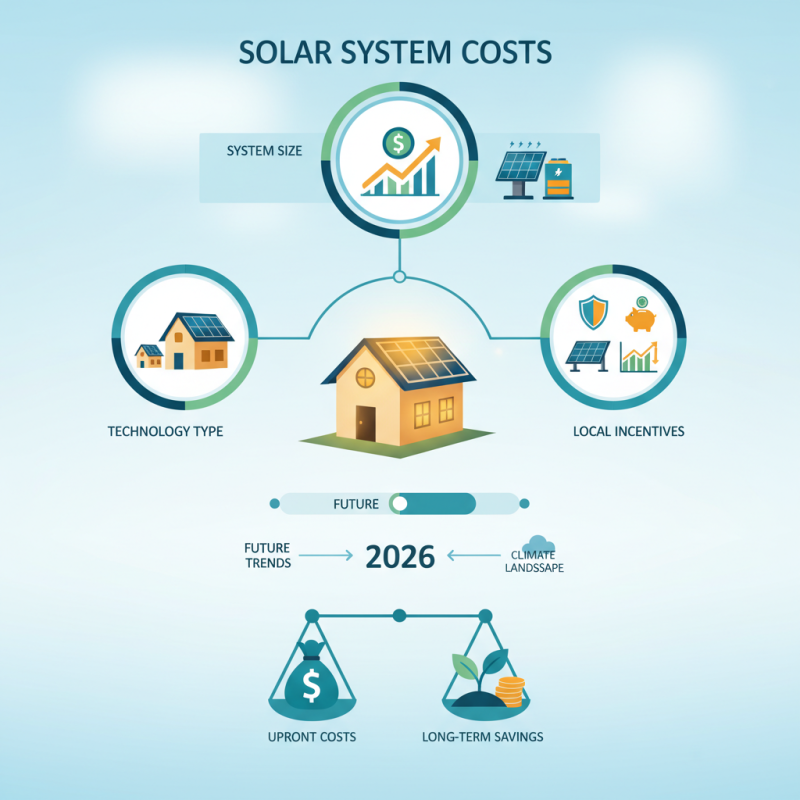
As homeowners explore renewable energy options, the question arises: how much does a solar system cost for a house? In 2026, the dynamics of solar energy pricing continue to evolve. The cost depends on numerous factors, including system size, technology type, and local incentives.
Understanding these elements is vital. Price variations can confuse many homeowners, leading to uncertainty. Not all installations offer the same return on investment. Evaluating your specific needs will help in assessing overall affordability. Financial planning for a solar system is not just about upfront costs; it also entails long-term savings.
In brief, navigating the world of solar energy comes with challenges. Homeowners must weigh options carefully. Conduct thorough research and consult experts to ensure informed decisions. The climate landscape can shift, influencing solar energy’s future. Thus, staying updated on costs is essential for maximizing benefits.
Overview of Solar System Costs in 2026
As we look ahead to 2026, solar system costs are a hot topic. The price to install solar panels has fluctuated over the years. By 2026, homeowners can expect to pay between $15,000 and $30,000 for a complete solar system. This estimate varies due to factors like location, system size, and available incentives.
One significant aspect influencing costs is technology advancements. Solar panels and inverters are becoming more efficient. However, the overall installation expenses may still see unexpected increases. Installation labor costs can vary greatly from region to region. Amidst evolving regulations and supply chain issues, prices can be unpredictable. Consumers might feel hesitant about investments without clear trends.
In addition, solar incentives may change by 2026. Tax credits and local rebates could significantly impact net costs. Homeowners should research available programs. They must remain vigilant about the evolving energy landscape. This uncertainty requires that buyers be prepared to adapt. Planning ahead is crucial; many can benefit from starting their research now.
How Much Does a Solar System Cost for Your House in 2026?
This chart displays the estimated costs of solar systems based on different system sizes in 2026. The average prices are derived from current trends and projections.
Factors Influencing Solar System Prices
When considering solar system prices for your home in 2026, several factors come into play. Installation costs can significantly vary based on your location. Regions with higher labor costs will see steeper prices. Government incentives also impact the final cost. Make sure to check local rebates and federal tax credits available to homeowners.
The size and capacity of the solar system are crucial elements too. Larger systems provide more energy but come with higher upfront costs. Think carefully about your energy consumption. Homes that have energy-efficient appliances may require a smaller system.
**Tip:** Research local installers to get competitive quotes.
Market trends in solar technology advancement influence prices as well. As technology improves, prices may drop. However, if demand exceeds supply, costs might rise. Keep an eye on trends in the renewable energy sector.
**Tip:** Monitor solar news for updates on technology and pricing.
In essence, the interplay of location, system size, and market trends creates a dynamic pricing landscape. Evaluating these variables will help you make informed decisions for your solar investment.
Comparison of Solar Panel Types and Their Prices
The solar panel market is evolving. In 2026, homeowners face several options. Photovoltaic (PV) systems dominate, with average prices ranging between $2.50 and $3.50 per watt. This varies based on panel type and local incentives, according to industry reports. Monocrystalline panels tend to be more efficient but often come at a higher cost, generally around $3.00 to $4.00 per watt.
Polycrystalline panels are more affordable, with prices starting around $1.50 to $2.50 per watt. However, they may not provide the same efficiency as their monocrystalline counterparts. Bifacial panels, which capture light from both sides, are gaining popularity. Their cost is comparable to high-end monocrystalline panels but offer improved energy generation.
Not all panels are created equal. Buyers must consider performance, longevity, and warranty. Some panels claim warranties of up to 25 years. Yet, real-world conditions can impact efficiency and lifespan.
As such, seeking expert advice when assessing options is vital. The data suggests that while initial costs may be high, long-term savings on energy can outweigh these expenses.
Government Incentives and Rebates for Solar Installation
Government incentives and rebates play a crucial role in making solar energy more accessible for homeowners. In 2026, several programs may significantly reduce the cost of installation. These incentives can come from both federal and state levels, promoting renewable energy use. Tax credits might offer substantial savings, decreasing initial out-of-pocket expenses for homeowners.
Local governments often provide additional rebates. These can vary widely, reflecting the community’s commitment to sustainable practices. For instance, some states may offer cash back after installation, while others may provide sales tax exemptions. Such programs encourage more homeowners to consider solar panels.
However, navigating these incentives can be complex. Homeowners should thoroughly research available options and eligibility requirements. The application process might also feel daunting. Seeking advice from energy experts can help clarify doubts. Understanding each step can lead to better financial decisions. Overall, the benefits are tangible, but they require careful consideration.
How Much Does a Solar System Cost for Your House in 2026? - Government Incentives and Rebates for Solar Installation
| Category |
Average Cost ($) |
Government Incentives ($) |
Net Cost After Incentives ($) |
| Residential Solar System (5 kW) |
$15,000 |
$4,500 |
$10,500 |
| Residential Solar System (10 kW) |
$30,000 |
$9,000 |
$21,000 |
| Residential Solar System (15 kW) |
$45,000 |
$13,500 |
$31,500 |
| Federal Tax Credit (26% of system cost) |
Varies based on system cost |
Long-term Savings and Financial Benefits of Solar Energy
The decision to invest in a solar system for your home by 2026 can bring
significant long-term savings. Solar energy provides a renewable source of power, helping homeowners minimize
their electricity bills. Depending on your location, the average savings can range from $100s to $1000s
annually. This cost reduction stems from decreased reliance on traditional energy sources, which experience
fluctuating prices over time.
Moreover, many homeowners will benefit from government incentives and tax credits.
These financial opportunities can substantially lower the initial installation costs. It's essential to understand
your local policies to maximize savings. While solar panels require an upfront investment, the return on investment
often outpaces traditional methods. However, potential buyers should conduct thorough research.
It’s crucial to consider the installation process, maintenance costs, and the expected lifespan of the solar system.
While solar energy is a promising alternative, it isn’t without its complexities. Weather conditions and geographic
factors can impact efficiency. Additionally, homeowners must weigh potential aesthetic concerns versus functionality.
Finding a knowledgeable solar installer can mitigate these issues. Striking the right balance of benefits and
challenges is key to making an informed decision.
FAQS
: Government incentives help reduce the cost of installing solar panels. They can be from federal or state levels.
Homeowners can save money through tax credits and local rebates. These options make solar energy more financially accessible.
Yes, rebates can vary. Some areas offer cash back, while others provide sales tax exemptions.
The process can be complex and may feel overwhelming. Researching options thoroughly can help ease the process.
Savings typically range from hundreds to thousands of dollars annually, depending on location and usage patterns.
Weather conditions and geographical features can influence solar panel efficiency. It's essential to consider these aspects.
Yes, solar panels need maintenance. Homeowners should factor this into their budget and planning.
Buyers should consider installation processes, costs, and potential lifespan. This helps ensure a more informed decision.
Yes, aesthetic concerns can arise. Homeowners must balance appearance with functionality when choosing solar options.
Yes, consulting energy experts can clarify doubts and help navigate the incentives effectively.
Conclusion
In 2026, understanding how much does a solar system cost for a house becomes crucial for homeowners considering this renewable energy option. Various factors influence the prices, including the type of solar panels, installation complexity, and regional energy costs. Homeowners can choose from different solar panel types, each with distinct pricing and efficiency levels, allowing for tailored solutions based on specific energy needs.
Additionally, government incentives and rebates can significantly reduce the initial investment required, making solar systems more accessible. Over time, the long-term savings on energy bills and other financial benefits further enhance the appeal of solar energy, positioning it as a smart investment for environmentally-conscious homeowners.

 Smart Energy